

Win Over Varicose

Ktki web banner

#KabTakKarogeIgnore

Symptoms of Varicose veins

What are Varicose Veins?

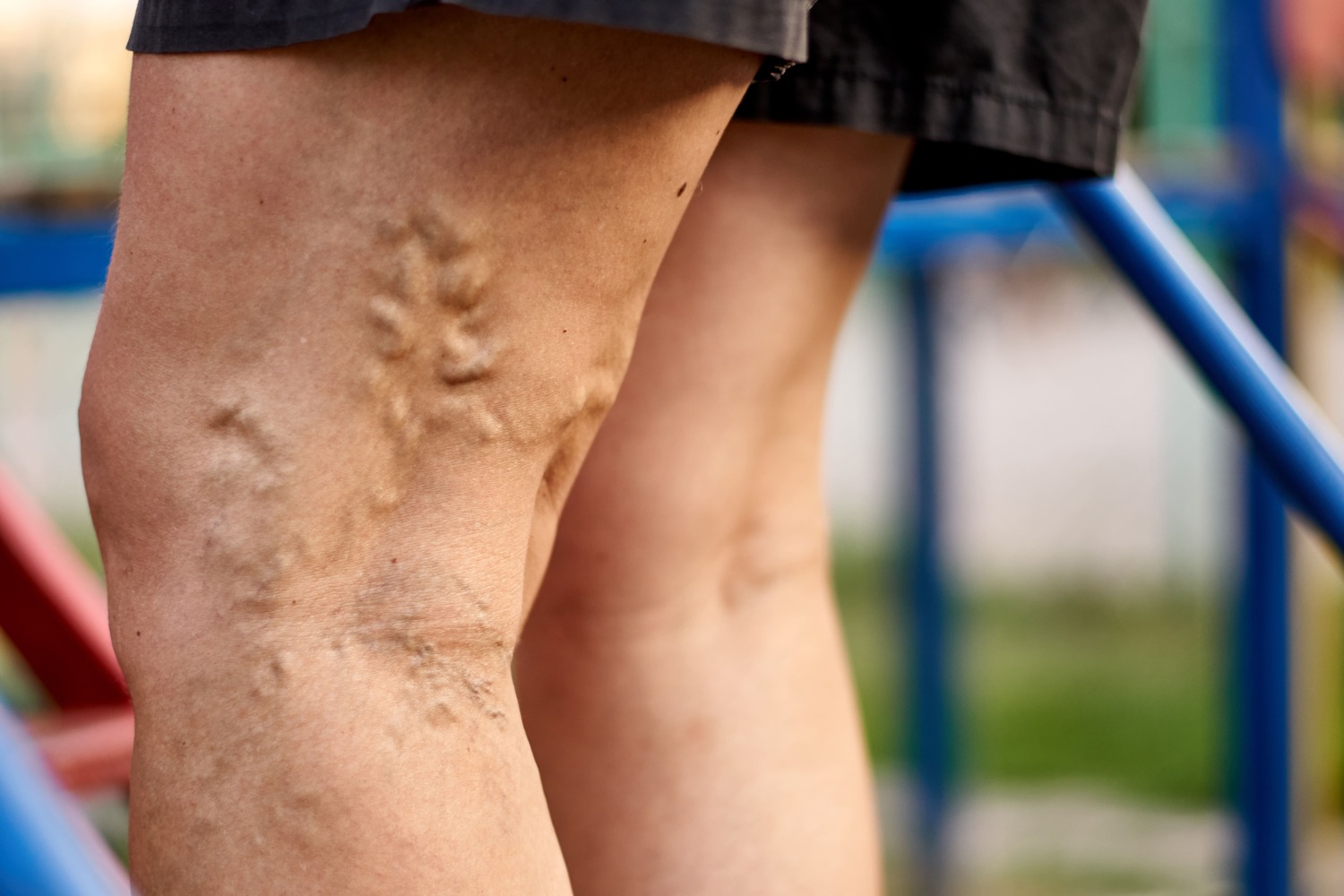
Varicose veins are twisted, enlarged veins, and are most likely to form in the legs.1

What Causes Varicose Veins?

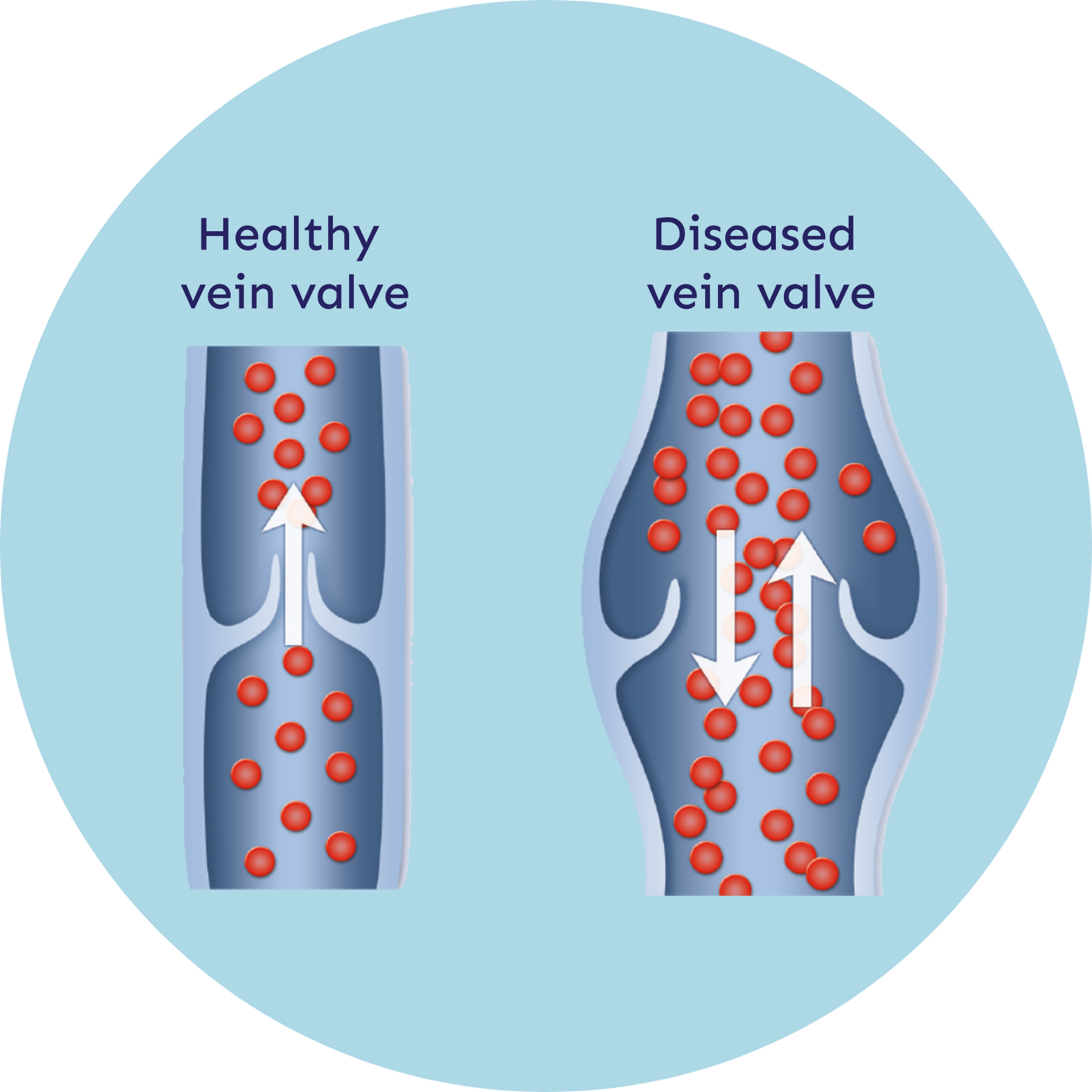
Veins have one-way valves that help blood flow toward the heart. When these veins are damaged or become weak, they cause the blood to flow backwards and pool in them. This causes veins to swell up and can lead to varicose veins.1

Healthy Veins Unhealthy Veins

Signs and Symptoms
of Varicose Veins3

Hexagon
Hexagon
Hexagon
Hexagon

Enlarged veins just
under the surface of
the skin

Dull, achy, feeling of heaviness in the legs

Colour changes in
the skin around
the affected area

Mild swelling
of ankles
and feet

Hexagon

Pain and
soreness of
legs

Hexagon

Cramping or
throbbing in
the legs

Hexagon

Itchy legs,
sometimes at the
ankles and feet

In severe cases, varicose veins can even lead to prolonged swelling in the legs and eventually result in more serious skin and tissue problems, such as non-healing sores and ulcers.

Enlarged Veins just under the surface of the skin
Dull, achy, feeling of heaviness in the legs
Colour changes in the skin around the affected area
Mild swelling of ankles and feet
Pain and soreness of legs
Cramping or throbbing in the legs
Itchy legs. sometimes at the ankles and feet

In severe cases, varicose veins can even lead to prolonged swelling in the legs and eventually result in more serious skin and tissue problems, such as non-healing sores and ulcers.

Adhesive Therapy

Health Charcha Podcast

Stages of Varicose Veins

C1

Telangiectasias or Reticular Veins

Also called “spider veins” or “thread veins”—small, superficial veins.
C2

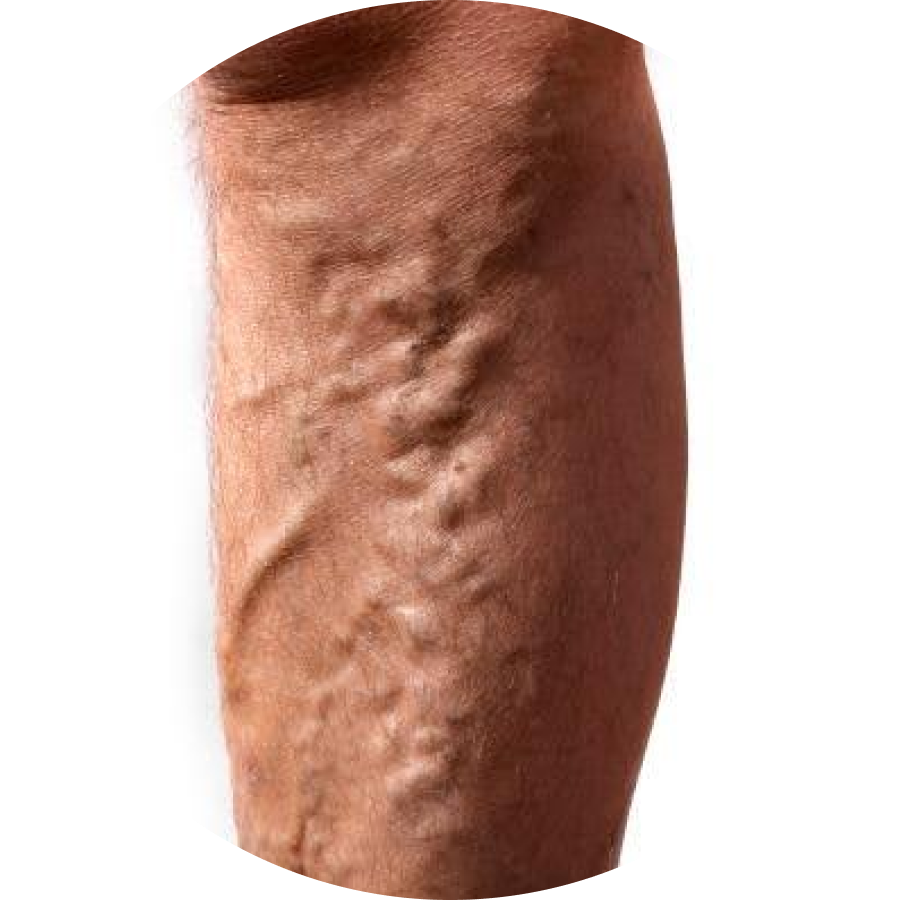
Varicose Veins

Clearly visible, dilated, tortuous veins ≥3 mm in diameter.
C3

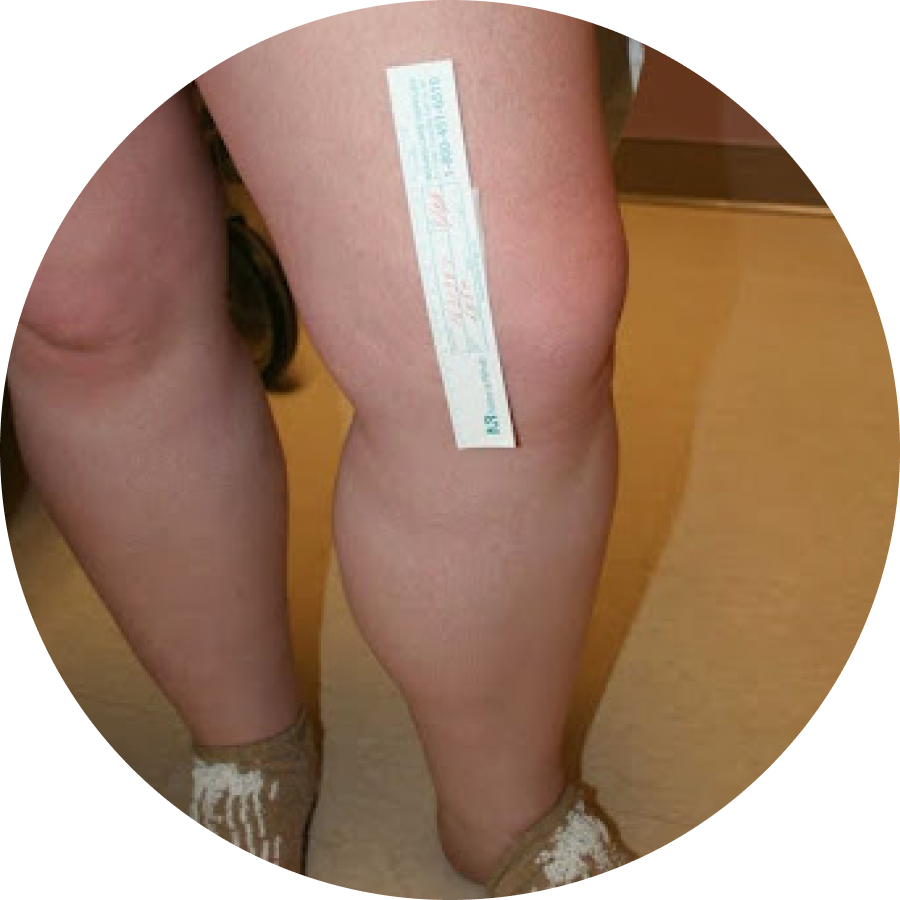
Edema (Swelling)

Persistent swelling of the lower legs/ankles due to venous insufficiency.
C4A

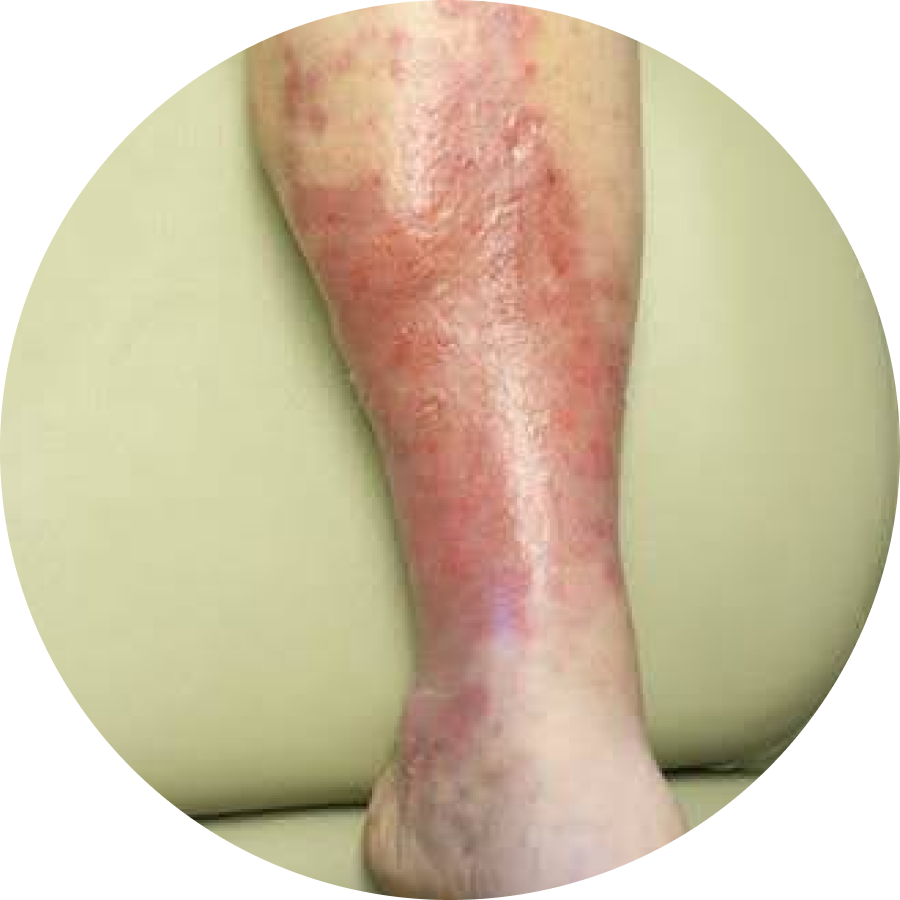
Pigmentation or Eczema

(darkened skin, red/brown patches, or itchy/rashy skin)
C4B

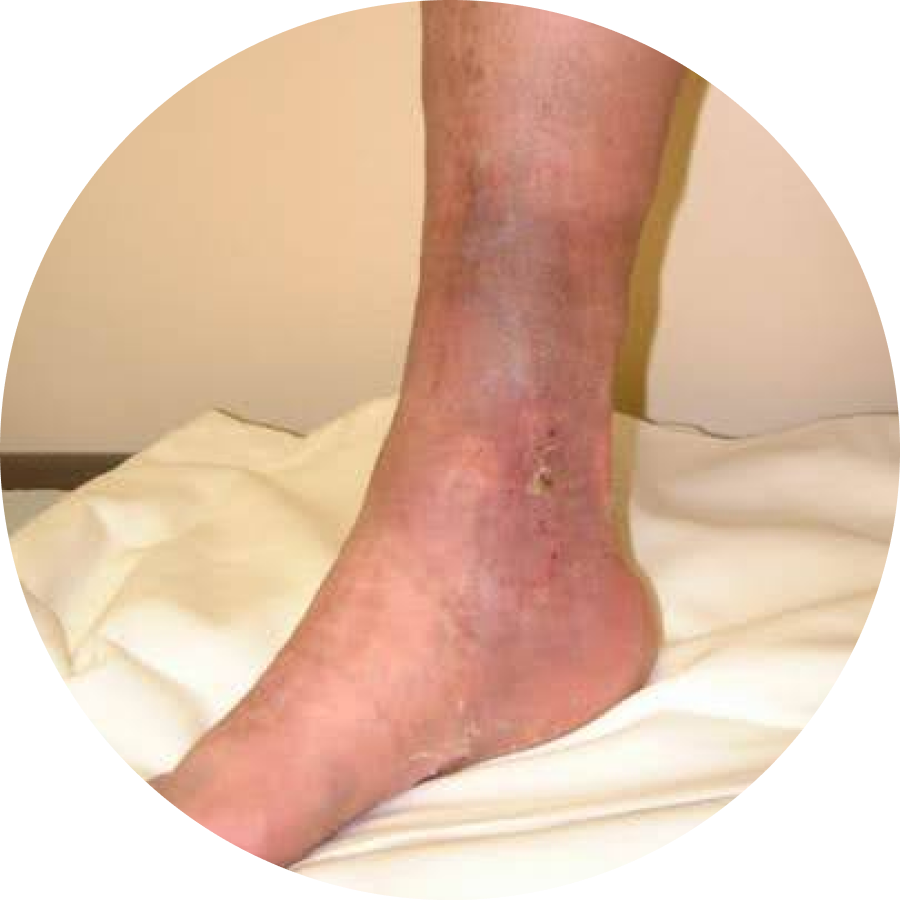
Lipodermato-sclerosis or Atrophie Blanche

(hardening/thickening of skin/fat) or white atrophy (white, scar-like skin patches)
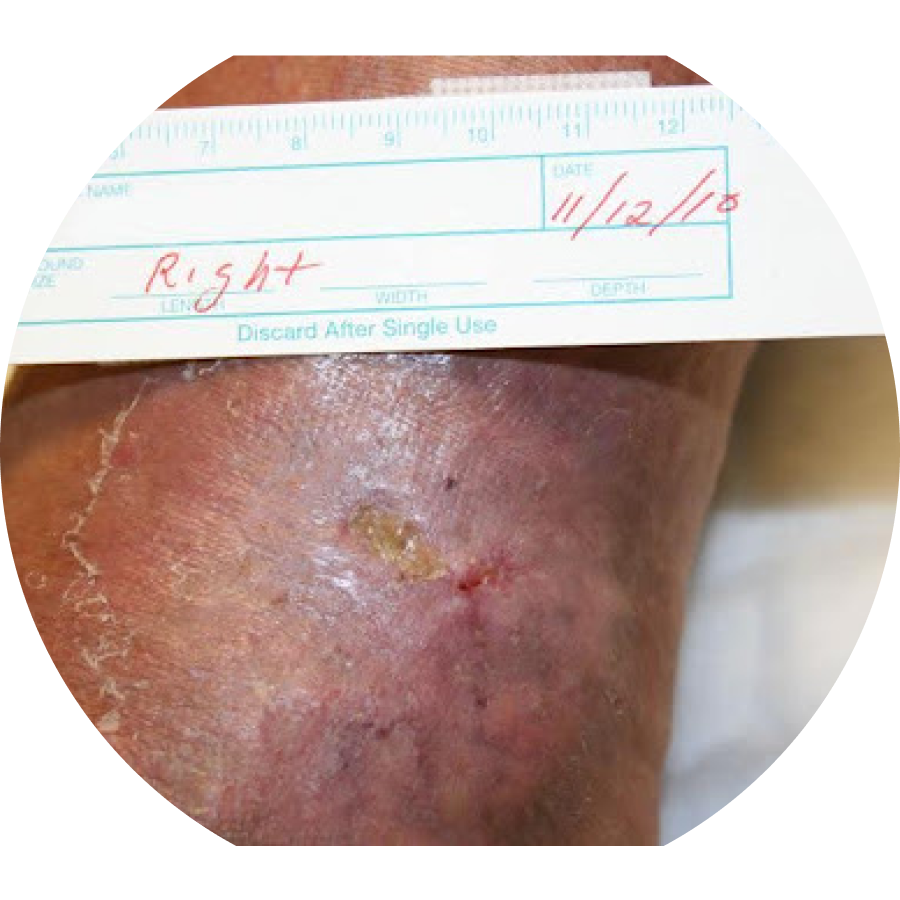
C5

Healed Venous Ulcer

Skin ulcer due to venous disease that has healed.
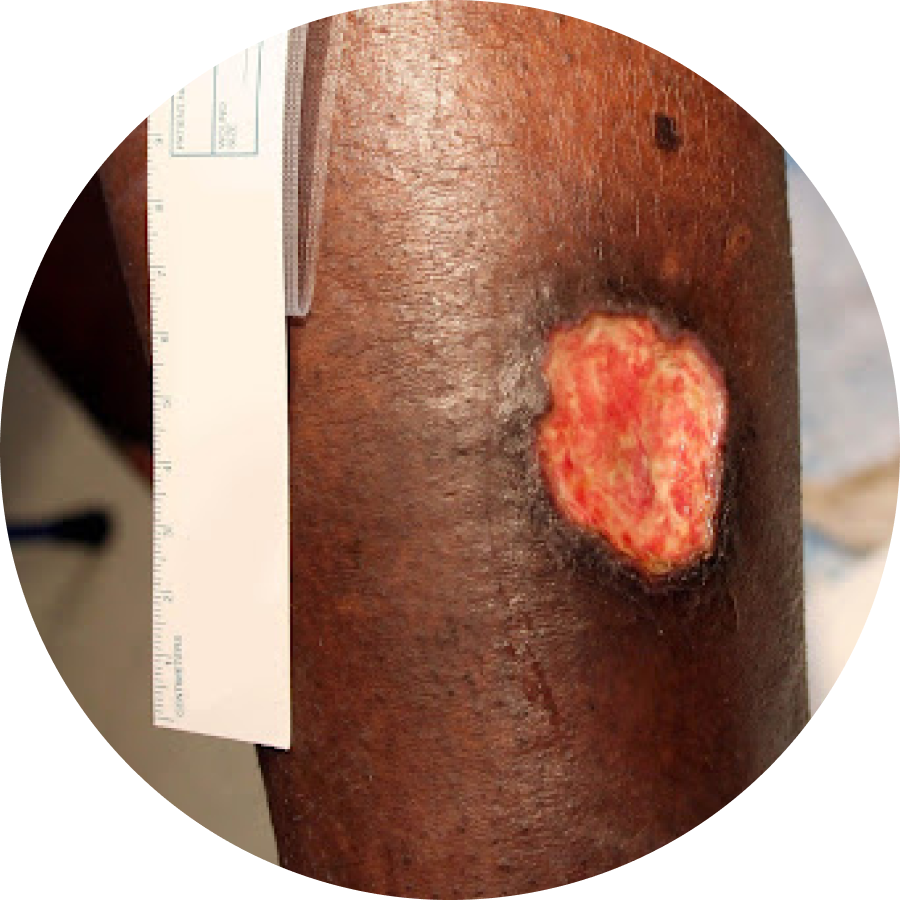
C6

Active Venous Ulcer

Open, non-healing ulcer due to severe chronic venous insufficiency.
Who are the people at risk?

Varicose veins affect BOTH men and women. Following are the risk factors for developing Chronic Venous Insufficiency (CVI – damage and weakening of veins cause the blood to flow backwards and pooling)1,2

OLD-AGE

Old Age

PREVIOUS-LEG-INJURY

Previous Inquiry

FAMILY-HISTORY

Family History

BEING-OVERWEIGHT-OR-OBESITY

Being Overweight or Obesity

SMOKING

Smoking

LACK-OF-MOVEMENT

Lack of Movement-Prolonged Standing or Sitting Posture

PREGNANCY

Pregnancy

Patient Testimonials

Scroll to Top